
Feetify Reviews 2026: Is Feetify Worth It for Sellers?


If you have been researching how to sell feet pics online, Feetify is one of the niche platforms that frequently appears in comparison lists alongside larger creator marketplaces.
Many users also discover Feetify while learning how to become a foot fetish model and exploring different platforms where foot content can be monetised.
This review examines Feetify from a practical, research-led perspective: how it works, what sellers actually experience, how monetisation functions, and whether it is realistically worth using in 2026.
Quick Verdict
01. What Is Feetify?
Feetify is a niche marketplace designed for creators who want to sell feet pictures, videos, and custom content directly to buyers.
Unlike general creator platforms such as OnlyFans, it focuses exclusively on foot-related content. This creates a narrower but more targeted audience where their buyers are there specifically to browse and purchase the content on offer.
Feetify is less like a social media app and more like a small search-based marketplace. In practice, this means people are found based on how well their profile is set up and how active they are. The most important factors for visibility are:
- How complete your profile is
- How often you upload new content
- The keywords and descriptions you use to describe your content
How Feetify Works
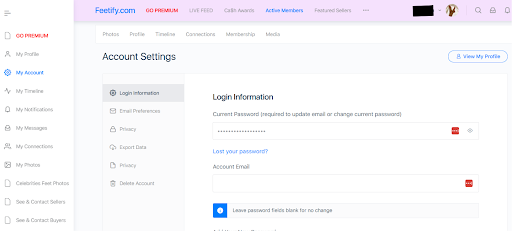
1. Create an Account
Users sign up and begin building a seller profile.
2. Build a Profile
Sellers configure:
- bio
- images
- galleries
- pricing
- content categories
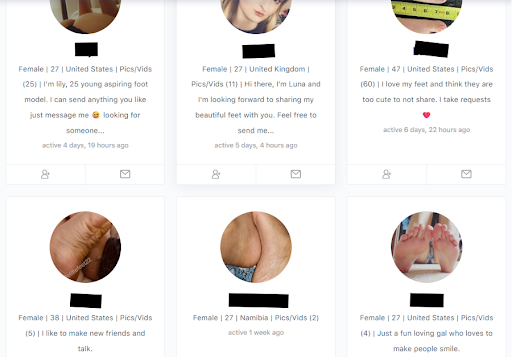
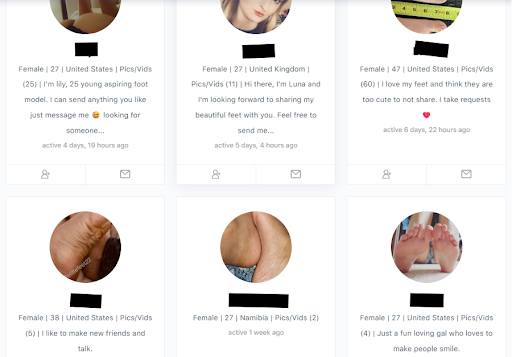
From the profiles we reviewed, a clear pattern emerges.
Sellers who are more active usually have fuller profiles with plenty of images and a well-written bio. In contrast, less active accounts often look incomplete and don’t clearly explain what type of content they offer.
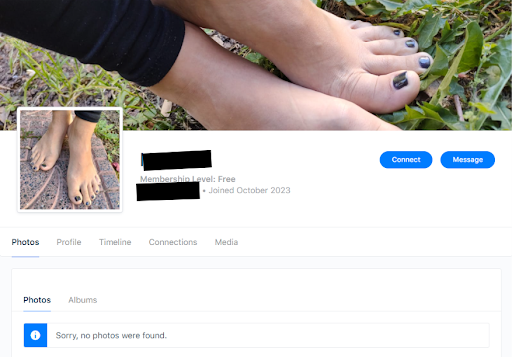
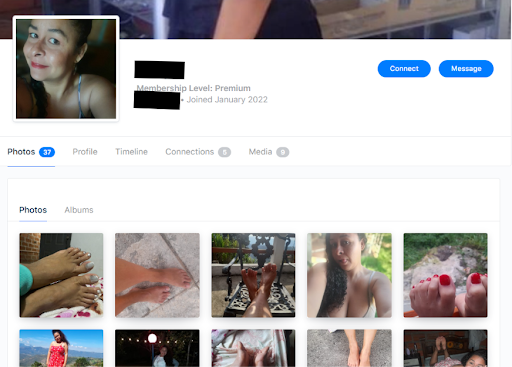
We also noted that the site ‘rewarded’ premium sellers with higher visibility, but more on that later.
Overall, the more complete and detailed a profile is, the more likely it is to be visible and attract attention on the platform.
3. Upload Content
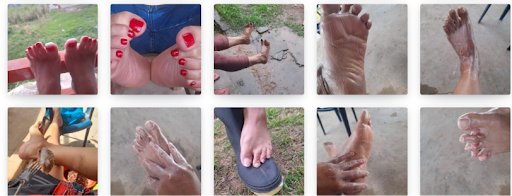
Creators upload:
- feet photos
- themed sets
- short videos
- custom content previews
4. Buyer Interaction
Buyers browse listings and initiate direct messaging or custom requests.
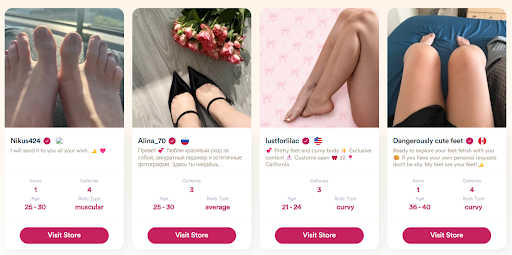
to Feetify, to see what we mean:
Who Uses Feetify?
Common entry point for beginners exploring niche monetisation.
Often used as a secondary marketplace alongside larger platforms.
Highly niche-specific audience searching explicitly for foot content.
How Feetify Differs From Other Platforms
Focused Niche vs General Platforms
Unlike broad creator platforms that host all types of content such as OnlyFans, Feetify is built exclusively around foot content. Compared to other feet pic marketplaces, it feels more like a combined marketplace and community rather than a simple listing site.
Discovery Happens Inside the Platform
Instead of relying on external traffic like social media, Feetify mainly drives discovery through internal search and browsing. This makes visibility depend more on how you perform inside the platform itself than outside promotion.
Activity Affects Visibility More Strongly
Across most feet platforms activity matters, but on Feetify it plays a bigger role. Regular uploads and updates tend to boost visibility which sellers are rewarded for. While inactive profiles quickly become harder to find.
02. Is Feetify Legit or a Scam?
Is Feetify a Legitimate Platform?
This is probably one of the most common searches in relation to Feetify.
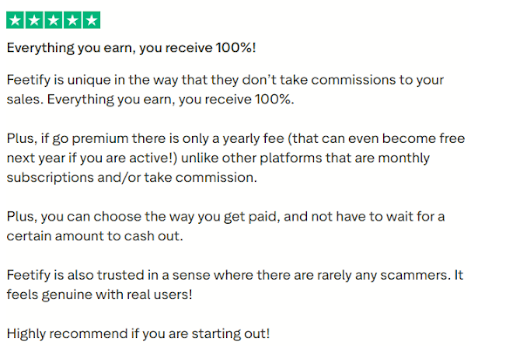
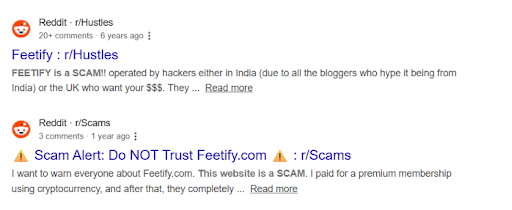
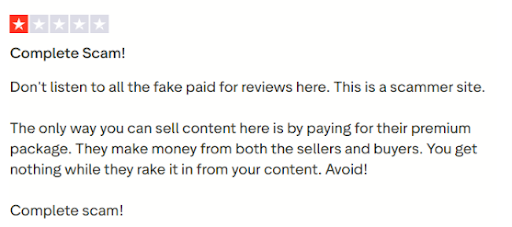
Feetify claims it has an active community of sellers, a working system for browsing and messaging, and clear ways for creators to sell content and earn money. But, it does have an online reputation for being a scam site. We’ve seen multiple public reviews and user discussions where users are complaining about security concerns, lack of verification, being blocked from the site after payment of premium membership and other stories relating to earnings, unexpected commission charges for free account holders, lack of customer support, users being incentivised to leave positive reviews and more. However, it has been trading for a number of years, and does have a community of loyal users.
Nothing in the platform’s structure suggests it is designed to deliberately mislead users or operate fraudulently. However, their marketing language may create unrealistic expectations for some users. For example, on their member page they say they have over half a million members, but do not clarify how many are sellers or buyers:

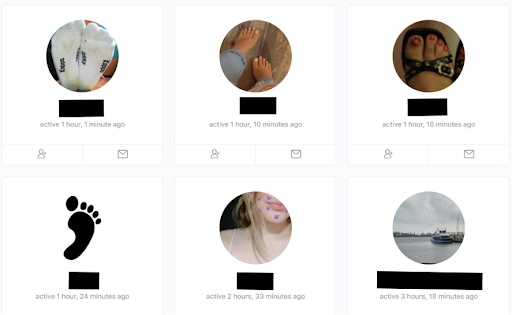
From this number, they have around 8384 recently active Premium Sellers (who have paid to be more visible). This list included members who were last active over 6 years ago.
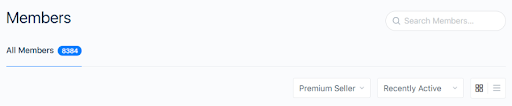
This sounds like there must be a large volume of buyers due to the difference in those two numbers. However the member figure will include all of the sellers on the free tier and all inactive buyers and sellers.
In their own ‘Sellers Paid’ page, they say that over 7000+ sellers have sold content on their site.

But the search option at the bottom of the page shows that just 1425 sellers have sold content on their site - and these sellers go back over 6 years. We accept that deleted accounts likely do not appear here, so could not verify how many this may be.

Common Concerns
Inactive or Low-Activity Profiles
A noticeable portion of profiles show limited recent updates. From what we found reviewing this site, we agree with this concern.
Uneven Buyer Engagement
Engagement appears concentrated among certain profiles rather than evenly distributed.
External Scam Risk
As with most creator marketplaces:
- Off-platform payment requests
- Impersonation attempts
- Unsolicited external contact
Site legitimacy/reputation
The reputation of the site can be off-putting for some users.
03. How Much Does Feetify Cost?
While it is free to join Feetify - we couldn’t find any subscription fees or costs to join - there is considerable encouragement to enrol onto their premium membership at a cost of $49 per year via cryptocurrency.
Free vs Premium

Is Premium Worth It?
Premium value appears strongest for:
- consistently active creators
- sellers uploading regularly
- users actively building a profile presence
- It offers cash incentives for sellers to upload content regularly.
There seem to be significant restrictions with the free model and there is consistent language on all pages that users should upgrade to maximise the features available on the site.
04. Can You Actually Make Money on Feetify?
Feetify supports monetisation, but income varies significantly between creators.
There is no fixed earning range that applies universally.
Feetify openly displays profiles of successful sellers on their site - however the numbers of sellers does seem to be quite low and does not display how much content any of these sellers have sold.
How Sellers Earn Money
As with all feet-pic dedicated platforms, money is earned by:
- Selling feet photos
- Selling video content
- Creating custom content
- Building an audience of repeat buyers
What Affects Sales?
- Profile completeness
- Content consistency
- Niche clarity
- Buyer engagement responsiveness
- Upload frequency
Time to First Sale
Varies significantly:
- some sellers report early engagement
- others require extended setup and consistency periods
Most new creators should expect gradual visibility building rather than immediate traction.
05. Feetify Cash Prizes
What They Are
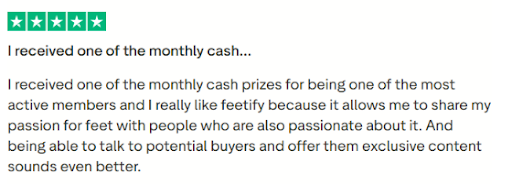
These are incentive-based monthly rewards tied to platform activity. Rewards are offered daily. Here’s what they say:
Instead of giving digital awards or mere badges that you can’t do anything with, we are giving cash awards daily to models, from $1,000 to $10,000+ cash awards in total EVERY SINGLE MONTH, to all the models who are most active and who post great quality pictures and/or videos!
Each cash award per model starts at $4, $10, $20, $50 and even $100+ per model, depending on the quality of your participation and uploads each month.
Qualification Factors
- activity level
- content uploads
- engagement participation
- premium membership
Role in Income
These cash prizes function as supplementary incentives, and can’t be considered a guaranteed source of primary earnings.
06. What We Like About Feetify
While Feetify has some limitations, there are also several reasons why creators continue to use the platform.
One advantage of Feetify is that buyers are already there specifically looking for foot content. Unlike broader creator platforms where creators compete across many niches, Feetify’s audience is much more targeted from the start.
The onboarding process is relatively simple compared to some larger creator marketplaces. New users can set up a profile, upload content, and begin exploring the platform without needing extensive setup or technical knowledge.
Feetify clearly rewards activity. Profiles that upload regularly and stay engaged appear more visible in browse results, which can help active creators gradually build traction over time.
Because the platform is entirely built around feet content, creators can position themselves more clearly within specific niches and buyer interests rather than trying to stand out in a much broader adult-content marketplace.
Compared to some feet pic sites that function mostly as static listing directories, Feetify feels more interactive and community-oriented, particularly through messaging, profile activity, and seller engagement features.
07.What We Don’t Like About Feetify
Compared to some newer platforms, Feetify’s layout can feel busy and slightly outdated in places. It may take new users a little time to get comfortable navigating profiles, messages, and marketplace sections.
Feetify promotes large member numbers throughout the site, but some of the publicly searchable data can make it difficult to fully understand how active the marketplace currently is. For example, visible seller activity and searchable sales figures do not always clearly align with the broader membership claims shown elsewhere on the platform.
While it is free to join, several important features are tied to premium membership. The platform strongly encourages upgrading for users who want increased visibility, messaging access, and broader profile functionality.
Only premium sellers can actively reach out to buyers. This means free accounts rely mostly on being discovered through browsing and search results, which can make it harder for newer or inactive profiles to gain traction.
08. Feetify vs Other Platforms
Market Position
Feetify sits within a niche segment of foot-content marketplaces rather than competing as a high-traffic general platform like OnlyFans.
Best Fit For
- beginner creators
- niche testers
- part-time sellers
- profile-building users
For creators comparing multiple niche marketplaces, platform structure and seller tools can vary significantly.
How FunWithFeet Approaches Things Differently
Like most platforms in this niche, FunWithFeet is designed to help buyers and sellers connect around foot content. However, there are a few areas where its approach differs from Feetify.
Verification and Moderation
FunWithFeet places a strong emphasis on account verification and moderation during the signup process. This is intended to help reduce fake accounts, impersonation, and spam activity within the marketplace.
Seller Tools and Profile Controls
The platform also includes features focused on helping creators manage how their profiles and content appear to buyers, including profile customisation options, preview controls, and marketplace visibility tools.
Messaging and Buyer Interaction
Unlike platforms where messaging access is heavily restricted on free accounts, FunWithFeet is structured to make buyer-seller interaction a more central part of the platform experience.
Focus on Marketplace Experience
FunWithFeet is designed to function more like a structured marketplace than a simple listing directory, with an emphasis on:
- profile discovery
- creator visibility
- secure interactions
- ongoing seller activity
As with any platform, results still depend heavily on factors such as content quality, consistency, niche positioning, and buyer demand.
09. Final Verdict: Is Feetify Worth It?
Feetify is a legitimate niche marketplace with real users, functioning monetisation tools, and active creator participation.
However, outcomes vary significantly depending on:
- activity level
- profile quality
- consistency
- niche positioning
The platform appears to reward active participation rather than passive listing.
Premium membership may enhance visibility for active users, but is unlikely to compensate for inactivity.
For creators entering the niche in 2026, Feetify probably works best as part of a broader strategy, for example using it alongside another feet pic platform to increase visibility.
10.Frequently Asked Questions
Is Feetify legit?
Yes, Feetify appears to be a legitimate niche marketplace with active seller profiles, messaging functionality, and monetisation tools. However, as with many smaller creator platforms, user experiences can vary significantly depending on activity level, expectations, and how the platform is used.
Is Feetify a scam?
There is no clear evidence that Feetify is deliberately fraudulent or operating as a scam platform. That said, the site does have mixed public reviews, and some users have raised concerns around visibility, premium upgrades, customer support, and earning expectations. As with any online marketplace, users should approach it carefully and keep expectations realistic.
Can you really make money on Feetify?
Yes, some creators do make money on Feetify through photos, videos, and custom content requests. However, earnings appear to vary widely between sellers and are influenced by factors such as profile quality, consistency, niche positioning, responsiveness, and overall activity.
How much does Feetify cost?
Feetify offers both free and premium memberships. The free version allows users to create a profile and browse the platform, while premium membership unlocks additional visibility, messaging access, and profile features. Pricing should always be checked directly on the platform, as membership costs may change over time.
What is included in the premium membership?
Premium membership mainly focuses on increasing seller visibility and access to platform features. This includes messaging functionality, broader profile customisation, and eligibility for certain platform incentives and promotional features.
How do Feetify cash prizes work?
Feetify offers monthly activity-based cash incentives for sellers who regularly upload content and stay active on the platform. While the headline figures can sound large at first glance, the total prize pool is distributed across multiple creators, and rewards vary depending on activity and participation levels.
Is Feetify better than other feet pic platforms?
That depends on what you are looking for. Feetify is more community-focused than some feet pic marketplaces and easier for beginners to start using, but it may not offer the same traffic levels, verification systems, or seller infrastructure as some larger or more established platforms.
How long does it take to get your first sale on Feetify?
There is no fixed timeline. Some sellers may receive attention quickly, while others take longer to gain visibility. From what we observed, creators with complete profiles, regular uploads, and clear niche positioning tend to have a better chance of attracting buyer interest over time.